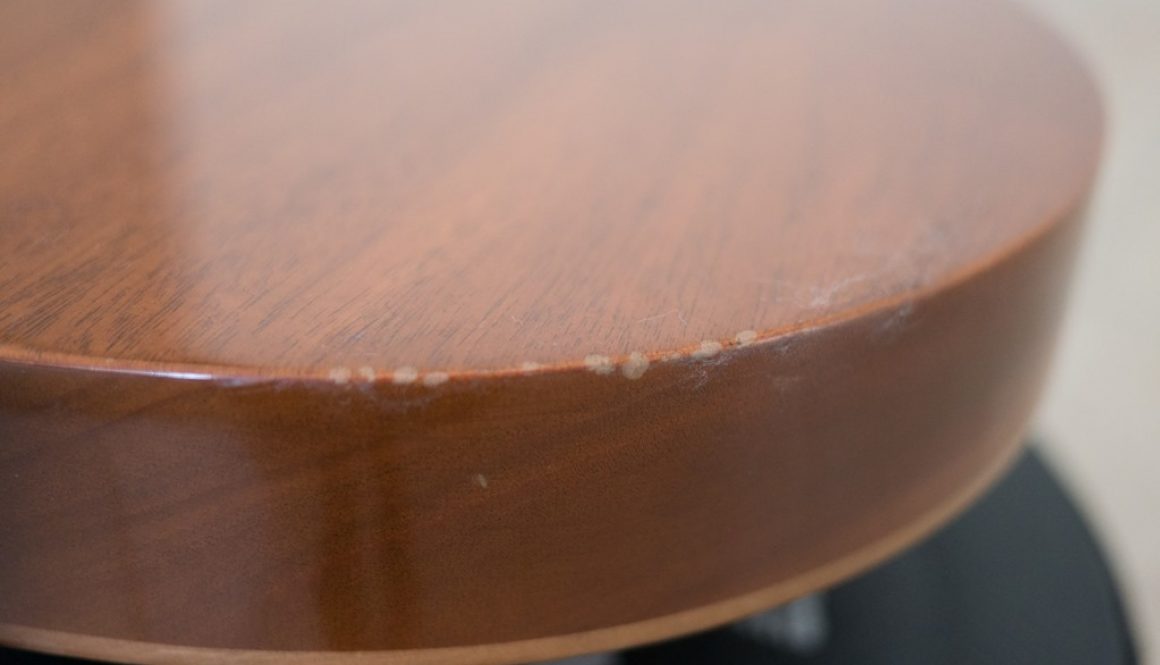
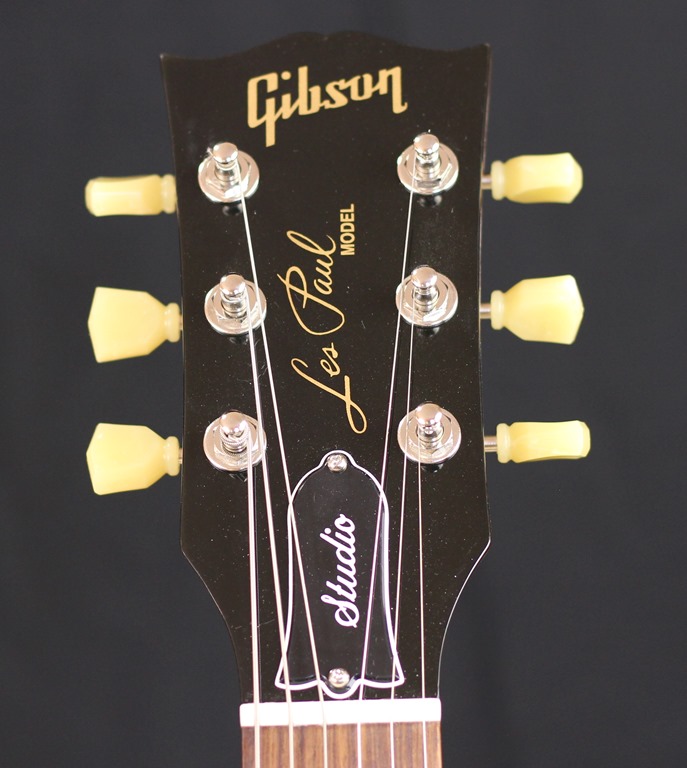
My Gibson Les Paul Studio has a gorgeously lustrous glossy nitrocellulose lacquer finish. This is a premium finish. Or so I thought! Recently I noticed that the bottom edges of the guitar body are showing some damage. My heart sank a little bit to see my treasured Les Paul disfigured like this. More
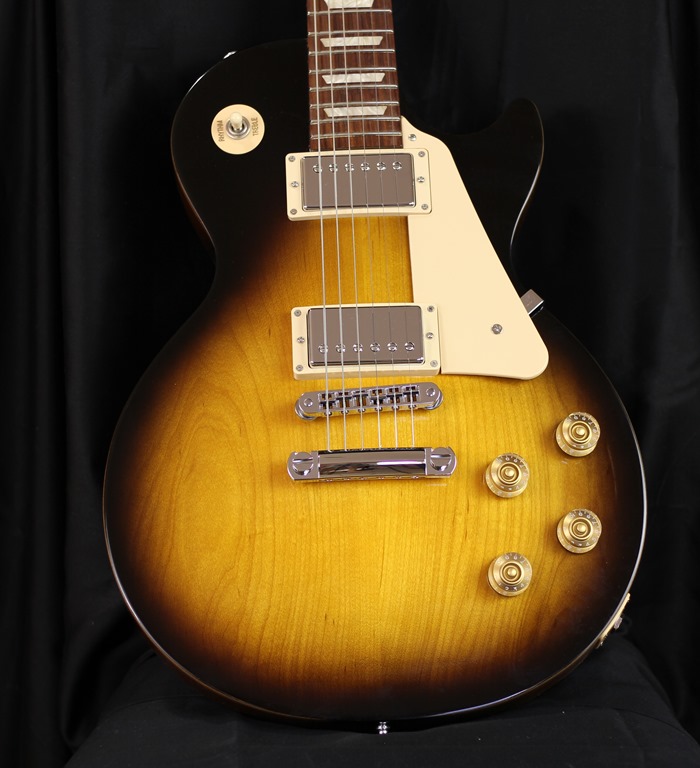
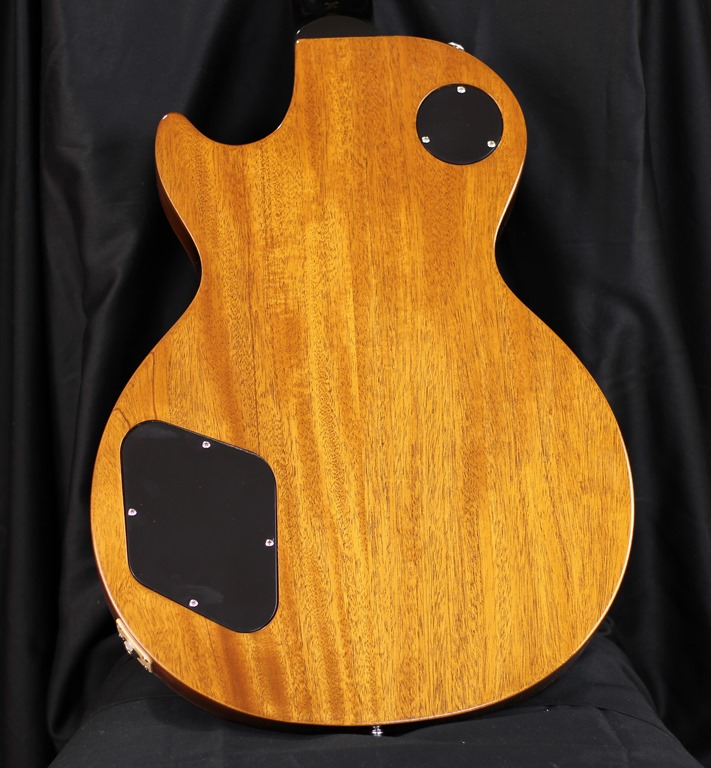
A couple weeks ago, my birthday rolled around, and I ended up purchasing a new Gibson 2013 Les Paul Studio. The Gibson is twice the price of my Epiphone and nearly ten times the price of the Monoprice. What are the differences? How do they stack up? More
A couple years back on my birthday, my family gave me a 2012 Epiphone 1960 Les Paul Tribute Plus. I love that guitar – and have played it nearly every day for two years. Aside from some cosmetic issues, the only real negative about the Tribute Plus is that it’s heavy- it’s a solid body with no weight relief. I’ve been playing many long gigs and rehearsals with my band the Drop Daddies, and the weight really does takes its toll. More
Lester Polsfuss passed away at the age of 94 after a fight with pneumonia on August 13, 2009. Nearly 3 years later, the property from the estate of Les Paul went up for auction in Beverly Hills, CA.
The estate items range from the awesome, to the slightly disturbing, to the nostalgic and the just plain silly. Let’s take those in order:
awesome: tons of guitars of all types, prototypes, design drawings and notes, amps, oscilloscopes and test equipment, electronics (pots, tubes, caps, transformers, etc), mixing desks and early multitrack tape recorders, and even some hand-cut wood acoustic wall panels
slightly disturbing: his social security and union cards, Chase credit card, drivers license, passport, Christmas cards, and signed checks. Oh, and a white terry cloth bath robe.
nostalgic: photos, awards, scripts and letters, the bronzed army boots that Les was wearing when he met Mary Ford, and his gloves and glasses. Ok, also slightly disturbing!
just silly: $400 of used picks, a New York state license plate reading Les Paul, a signed vegetarian cook book from Linda McCartney. Lots and lots of turtleneck shirts. Apparently the license plate sold for $10,000!
I don’t know where this fits- but a top-hat given to Les Paul by Slash (Valued at $6000-$8000! Hah!)
Man, did Les Paul have an amazing guitar collection!
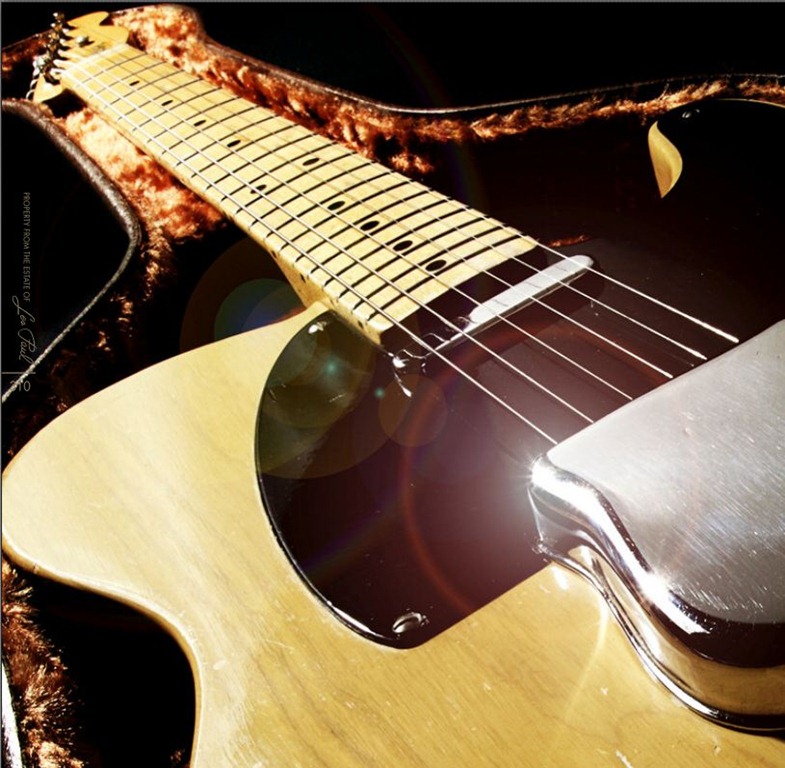
In addition to the gorgeous specimens from Gibson and Epiphone that you would expect, you’ll also find lot 722- a 1951 Fender No-Caster signed by Leo Fender (valued at $40,000-$60,000). It actually sold for $180,000 (!) as documented in this handheld video from the auction floor. That’s some kind of crazy, right there.
After nearly a year, I’m still loving my Epiphone Les Paul 1960 Tribute Plus. I‘ve played a number of gigs with it and it has proven itself absolutely reliable and roadworthy. It has really excelled in every situation – loud indoor gigs, scorchin hot outdoor summer gigs, and of course my everyday practice, both unplugged and amplified.
These Rotomatics are different from typical locking tuners, like the Sperzel’s or Grover’s own Roto-Grips, where you lock and unlock the string using a thumbscrew around back.
On the Rotomatics, you just insert the string, and give it a wind, and an inner-cam rotates, locking the string into place under the string’s own tension. I always feel a little uncertain when changing strings on these because the process is a bit different from other tuners. Here are the instructions from Grover:
1. Turn tip of string post until it clicks into place. This aligns string post holes.
2. Note string hole is off center. Turn knob to rotate post until string hole is positioned away from knob. Thread string up through bottom of hole and pull firmly. See drawing.
3. Turn to begin tuning. At first, only inner “Locking Cam” is turning, securely locking the string. Once the string is locked, outer post will turn.
4. Bring string to pitch.
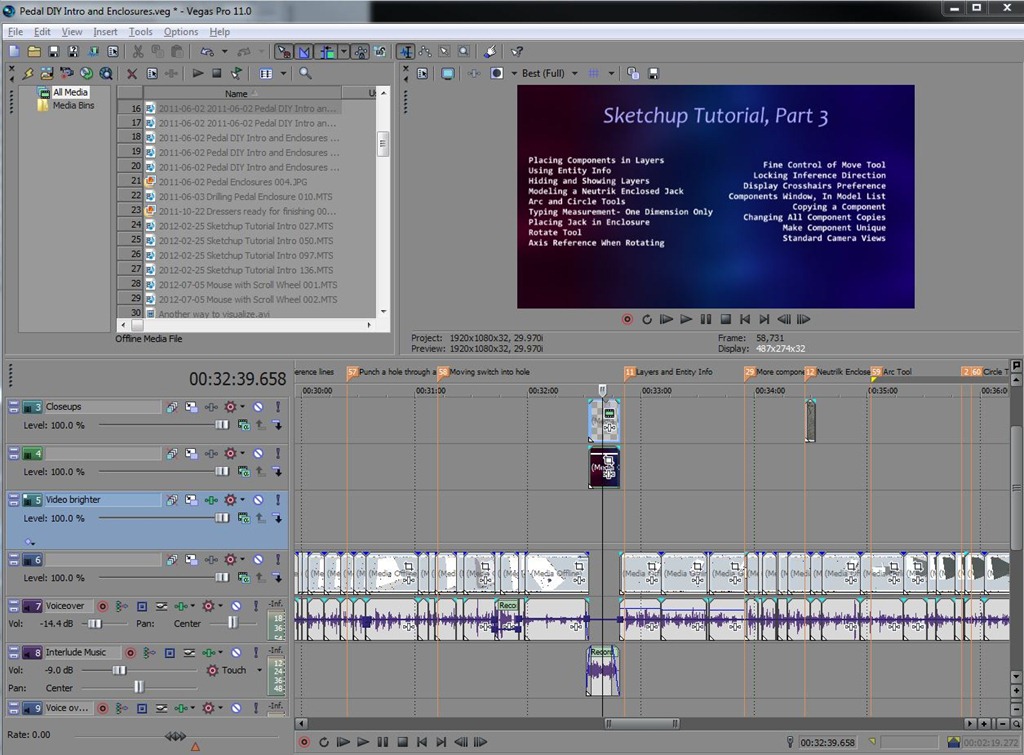
Dead air. Not good! As I was nearing completion of my epically long video for part 2 in my guitar pedal building series, one of the big items left on my to-do list was to find some appropriate thematic music for the section interludes. Each of the 5 tutorial sections has a table of contents image that sits on the screen for about 16 seconds. At that point in the project, each of these brief interludes was dead-silent.
I had this vague idea that I would compose some short piece of music, and then make five increasingly complex variations to play for each of the five increasingly advanced sections of the tutorial. 16 seconds is not very long- not long enough for a big composition, but maybe long enough for a short melody. This idea lurked in the back of my mind for a few weeks. A couple of aborted attempts just didn’t seem to fit the tone of the video- too perky, too funky, etc.
Inspiration arrived, as it sometimes does, with a new piece of gear. So with brand new Les Paul in hand, and Jamman Delay looper and Vox Ice 9 under foot, I recorded the following series of melodies. Each loop starts with a copy of a previous variation, and adds a little something.
I’m particularly fond of that last clip, even though it ended up on the cutting room floor. It’s got this crazy riff in it – which may be just a little too complex.
My new Epi Les Paul Tribute Plus arrived yesterday for my birthday, and it’s a beauty! These things are hard to find- none of the local stores have inventory, and every online retailer is backordered. I managed to get Guitar Center’s last one in the country(!) – from the store in Tonawanda, New York. The store manager there was great- sent me some pics, played it for me to confirm it was all good, gave me a great July 4th discount, and shipped it over for free. Thanks Chip!
Cosmetically, it’s really nice. Clean, well-defined flamed maple top and cream bindings. The cherryburst finish looks near-perfect- with rich warm coloring- not the bright overexposed yellow in the pictures at Guitar Center’s website. The Grover locking tuners feel fantastically smooth, and the switch, knobs and jack all seem good. And after some quick adjustments, it plays pretty well (but still needs some fine tuning).
The ’57 Classic pickups sound really dynamic, rich and beautiful – they’re warm when played gently, and crank when spanked. Love em. There’s quite a range of sounds with the push/pull series/parallel switching on the tone knobs. When a tone knob is pulled, the humbucker’s two coils are wired in parallel giving a lighter, brighter, thinner sound, somewhat reminiscent of a single coil (though different). It’s completely different from the ultra-thick and heavy series-humbucker sound (knob pushed in). This is a really versatile setup: a total of 8 different sounds using the 3 switches, not to mention the variations you can get by adjusting the volume knobs in the middle switch position.
A couple months ago, I had an unexpected revelation. An eye-opening, earth-shaking, revolutionary enlightenment. Ok, maybe I’m exaggerating and obsessing, but it was an honest-to-goodness WTF!
I was at a local music shop (ok, I admit it was Best Buy), and out of curiosity, I picked up an absurdly expensive Gibson Les Paul Traditional from the wall-o-guitars, plugged it into a Vox Night Train, and gave it a spin. I’ve never really given the Les Paul guitars much attention. Despite their iconic status and near ubiquity, I’ve always thought the Les Paul was just too heavy to consider. But… More